8 Lessons Learned From a Successful Web Launch in Australia
One of my favorite things about my job as a small business owner/independent marketer is getting to work with different markets and people from a range of backgrounds.
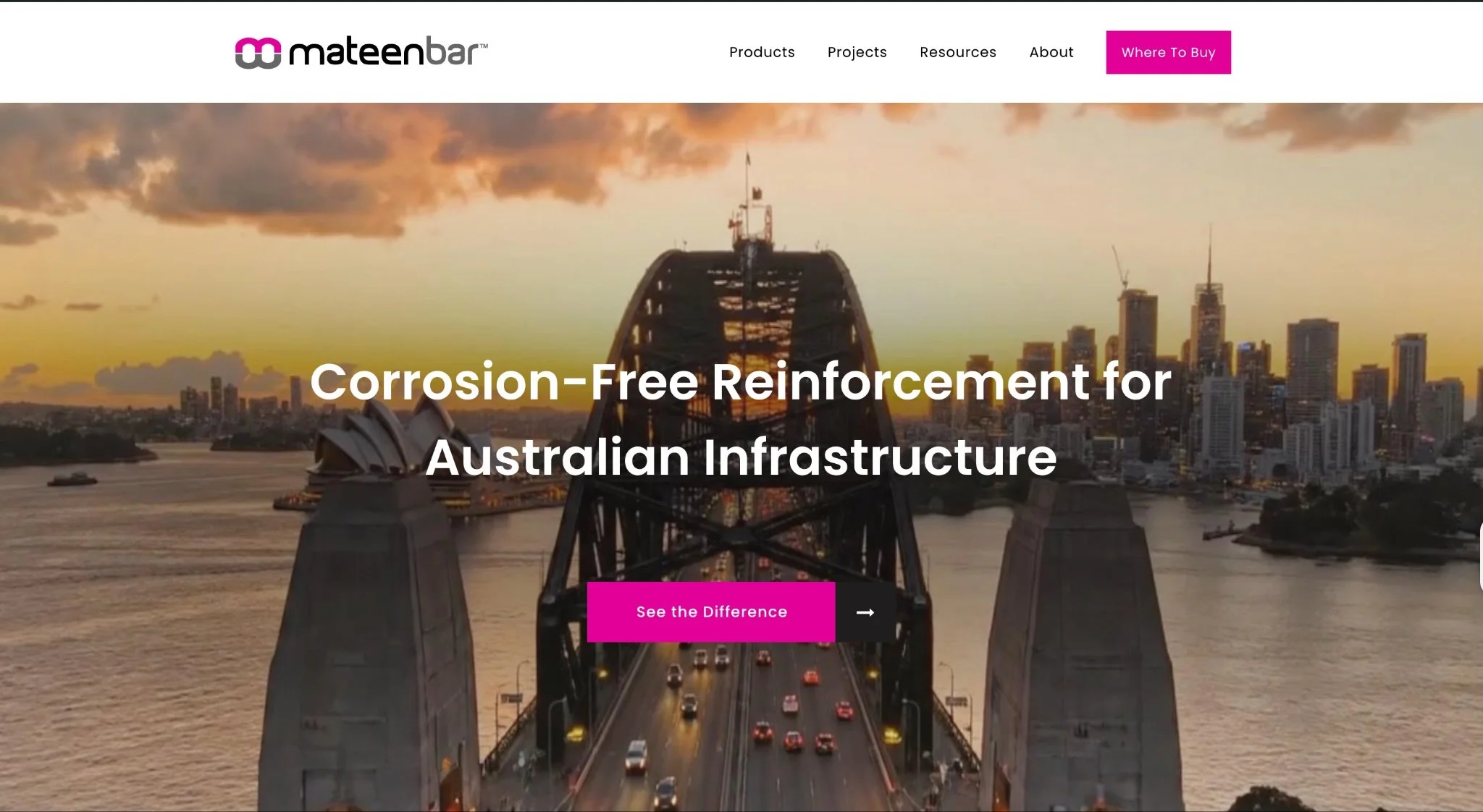
The most recent example was the launch of Mateenbar Australia’s new website, where I helped lead content creation, project management and website development for a company located in a place that’s a meager 20+ hour flight from where I live.
I’ve been fortunate enough to work in markets spanning from Australia, New Zealand, China, the UK and Canada.
Hands down, the lessons I’ve learned from my international marketing experience are some of the most substantial I’ve gleaned in the still-introductory stages of my career (I say as I creep closer to turning 29 years old, which means my 20s are almost over, a reality I’m not yet ready to face).
I’m taking this time to expand on the lessons I’ve learned marketing from places I’ve never been (but endlessly hope to one day).
1. Content Must Be Curated to the Market
When we started the Mateenbar Australia project, I was under the impression we were basically going to transfer the content from the U.S. website (which I also helped with) and make little tweaks from there.
The reality was far more nuanced than that.
It’s difficult to understand the differences in how different markets communicate until you actually start building content for them.
With the Mateenbar Australia project, we had to completely overhaul much of the content we spent 6+ months building for the U.S. website, including:
The tone and approach of the written content. Aussies and Kiwis (especially in the engineering sector, which was a key target for this project) are more receptive to direct, factual-based content as opposed to the glitzy, salesy content commonly seen in American media.
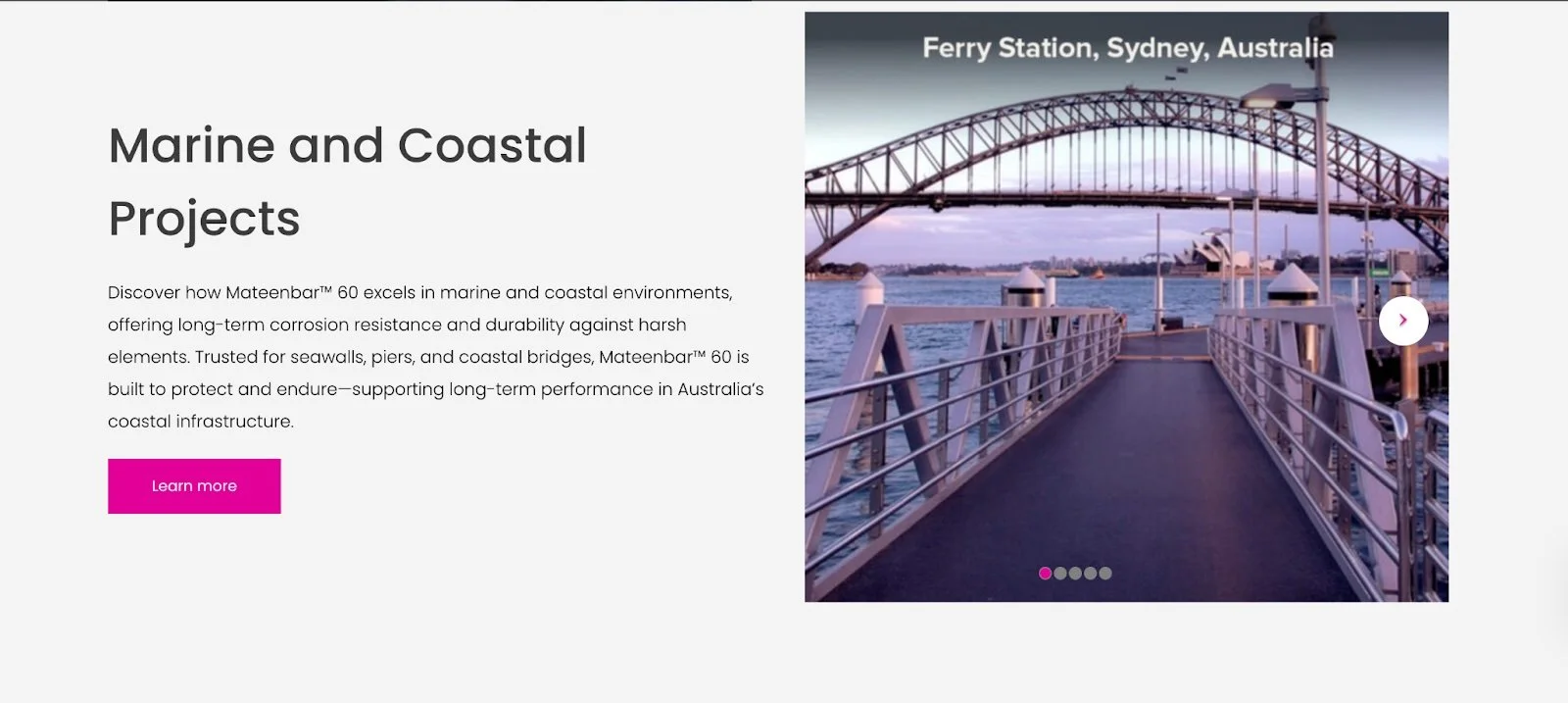
The visuals. This is seemingly obvious, but you must tailor the imagery of your content to the target audience. An example from this project is how often we had to swap out American infrastructure projects for Australian-based ones.
2. Listen and Learn Intently
I’m a journalist at heart. I love listening to people’s stories and picking up on contextual clues as I observe.
This doubles in significance when you’re dealing with unfamiliar markets and industries.
It’s not just picking up on what they’re saying about their products, services, etc.
It’s how they’re saying it. The tone they’re talking in. The mannerisms they’re using.
I could tell right away from the initial call I had on the Mateenbar Australia project that:
Content that felt trustworthy and authoritative was going to be a must if we were going to stand out from competitors.
The “here’s why we’re the best!” type of jargon you see from companies in America would fall on deaf ears in Australia.
A good example of these two points is the banner and introductory copy for Mateenbar’s About Us page:
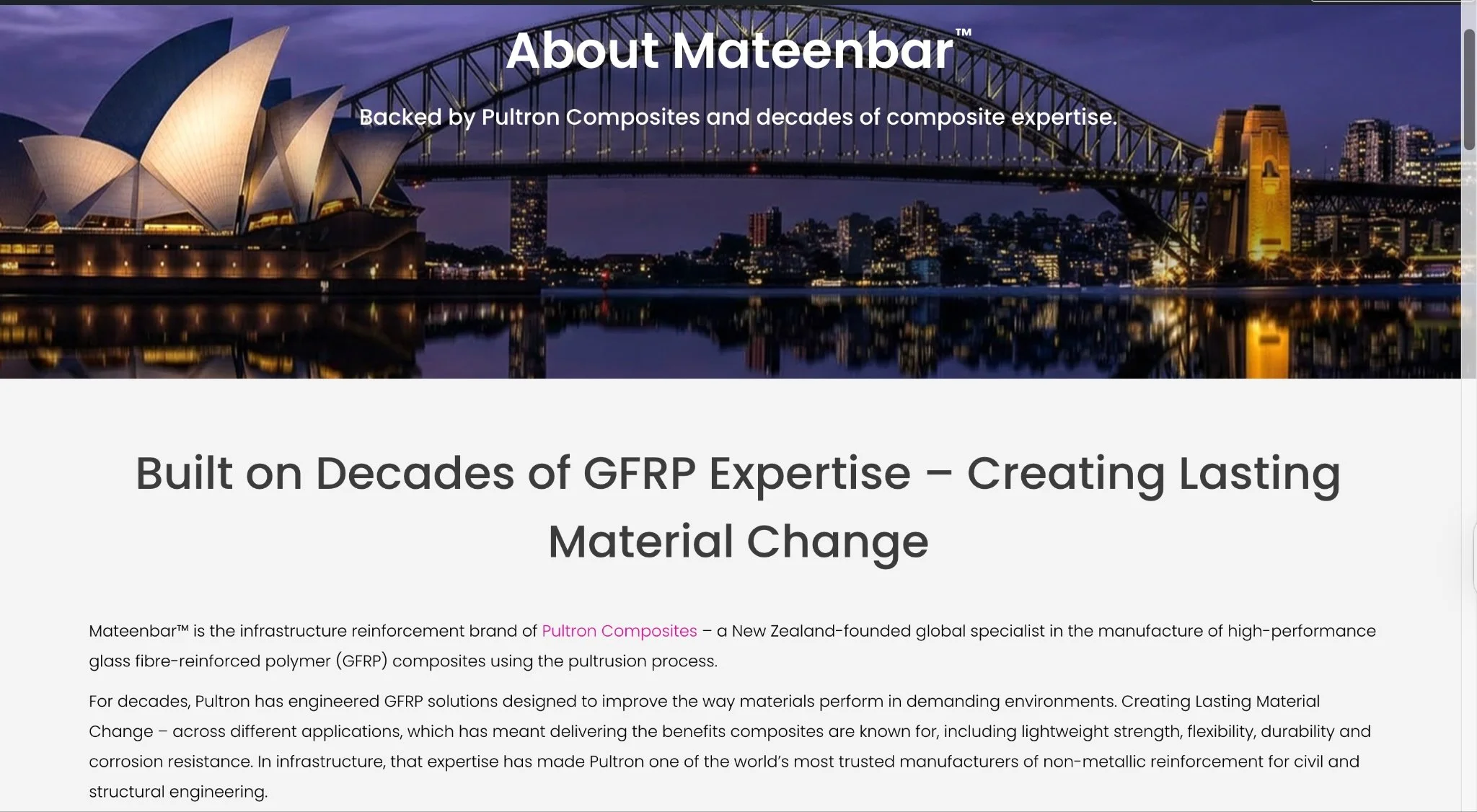
It establishes local expertise that immediately gives you the sense that they are the authority in their space in Australia.
When you actually listen and observe intently, you gain important context for how markets communicate, which will help once you sit down with a cup of coffee and try to create the content from scratch.
3. Come From a Place of Neutrality
Put all biases and assumptions aside when dealing with an audience outside of your region.
This should be your goal in marketing, no matter the case, but especially when dealing with a new place.
I underestimated the scope of this project because I assumed much of the U.S. content we created would transfer seamlessly to Australia. Always keep an open and clear mind when approaching international projects.
4. Be Open to Criticism
The most frank feedback I’ve ever received from a client was from Australia. It was a couple of years ago, on something I wrote, and it was pretty blunt (to put it kindly). Once I got past my ego, though, I loved it!
When you’re marketing in different regions, the stakeholders might not be keen on your style at first.
To fit the project’s needs, you must adapt to the stakeholders’ preferences. The only way to do this is through constructive feedback.
For this web project, it was common for me to open my computer and have 20+ emails of content feedback every morning to go through. I grew to love it all, even if it took me hours to get through.
5. Utilize Tools to Save Time
With the proliferation of AI, there is an endless barrage of tools at your disposal, many of which can be used to help with international projects.
I’ll use an example from the writing world (my bread-and-butter).
Countries speak and write differently, and international stakeholders absolutely expect you to write in their preferred language.
Grammarly is my preferred tool for ensuring I’m writing grammatically correct for each market.
Install Grammarly as a part of your browser (and whatever software you use to write) in the language you are currently writing in.
Grammarly will flag right then and there if you need to change the spelling of the word you’re writing.
This is an underrated time-saver, and just one of the many tools out there that can help you increase efficiency with your projects.
6. Follow Region-Specific Data Trends
Following regional data trends is key when you’re conducting research in a new market.
For example, when doing keyword research for SEO/AI search, you can’t assume that data and search trends in one country will hold up in another.
For example, this web project had a unique primary keyword (“fibreglass rebar”). It’s unique because many people (even in Australia) search for “fiberglass rebar” – the American English version.
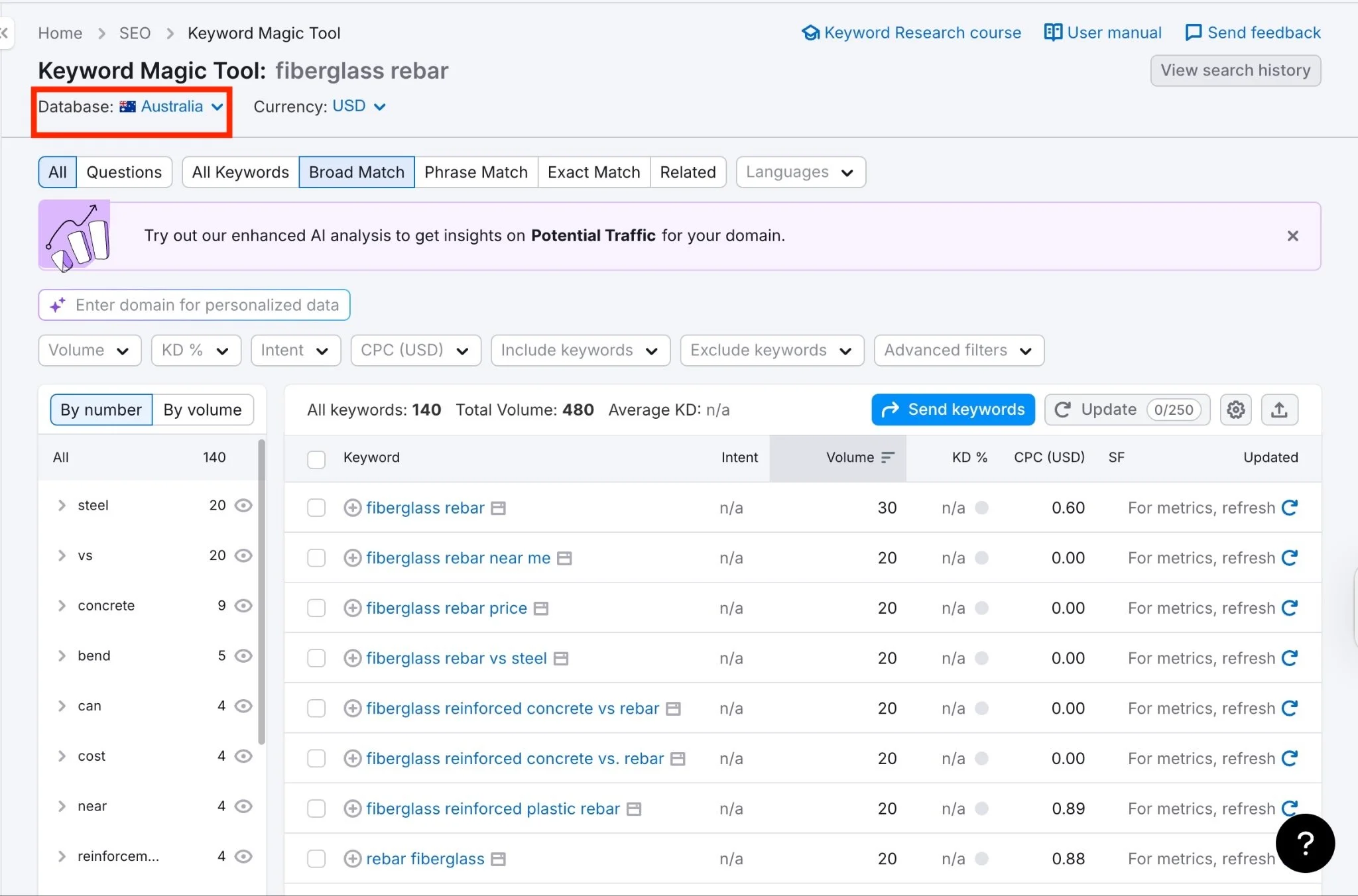
Tip: Use a tool like Semrush to get region-specific data when mapping your keyword strategy.
Still, you want to speak in the tongue of your target audience. So, when targeting our primary keyword, the strategy was to use mostly “fibreglass rebar”, sprinkling in “fiberglass” when natural and appropriate.
Without knowing that people actually search the American English version of “fiberglass” in Australia, though, we likely would’ve assumed to just use “fibreglass” in all cases. This could’ve led to a missed visibility opportunity.
Always follow the data!
7. Consistency Matters
This point was reiterated to me by Amit, the talented design consultant with whom I worked closely on this project.
When you’re creating a new brand (or rebranding from scratch), you want to uphold consistent standards across channels.
Nowadays, the entry points for discovery are vast in marketing. It’s not just typing in a product or service on Google and finding your website. Social media, podcasts, Reddit and AI platforms, in particular, play a huge role in that initial touchpoint.
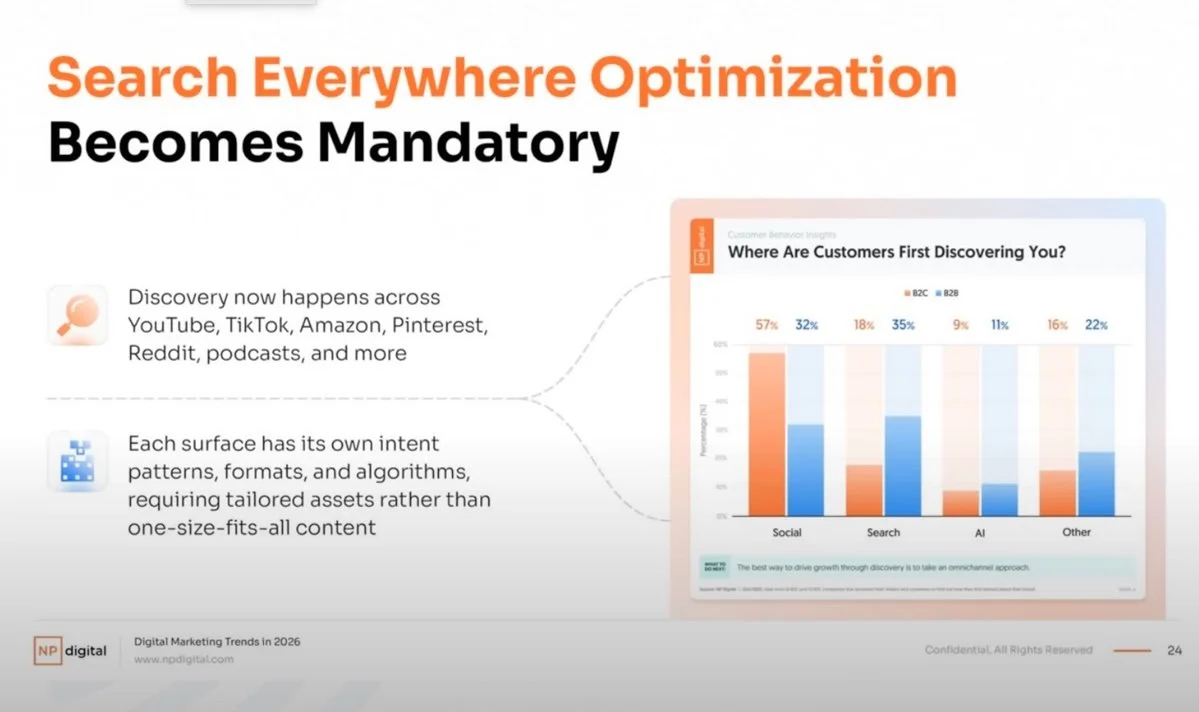
Photo courtesy of NP Digital.
With AI platforms, consistency is amplified in importance because what the platforms regurgitate is based in part on how you’re represented across channels.
If your messaging and visuals are inconsistent, you risk your brand being misrepresented in AI responses.
It’s also best for the user experience and your overall brand reputation to keep things nice and structured.
Even seemingly small things, like uniform font styles and heading structures, should be prioritized early on.
Every little thing matters, even in a world where studious attention to detail is shrinking.
8. Work With a Great Team
Doing web projects really reinforces (fully intentional pun here, since Mateenbar Australia’s main product line is fiberglass reinforcement) how important it is to work with great people.
It requires daily coordination between project stakeholders, writers, designers and developers.
I had the unique opportunity to lead the coordination between all parties of this project, and while it led to a full inbox every morning during peak times, it was made easier by having an excellent team to work with.
S/O to Amit Choudhury, Angeline Beattie, Neerthigan Sivananthan, Mizanur Chowdhury (and developers), as well as Anna Holdsworth and the entire Pultron Team for their contributions to a successful launch.
Need a Free Opinion on a New Website Launch?
Want to kick off your new website? Reach out for a free consultation, and we’ll discuss how we can put your vision into action.
See our other case studies: